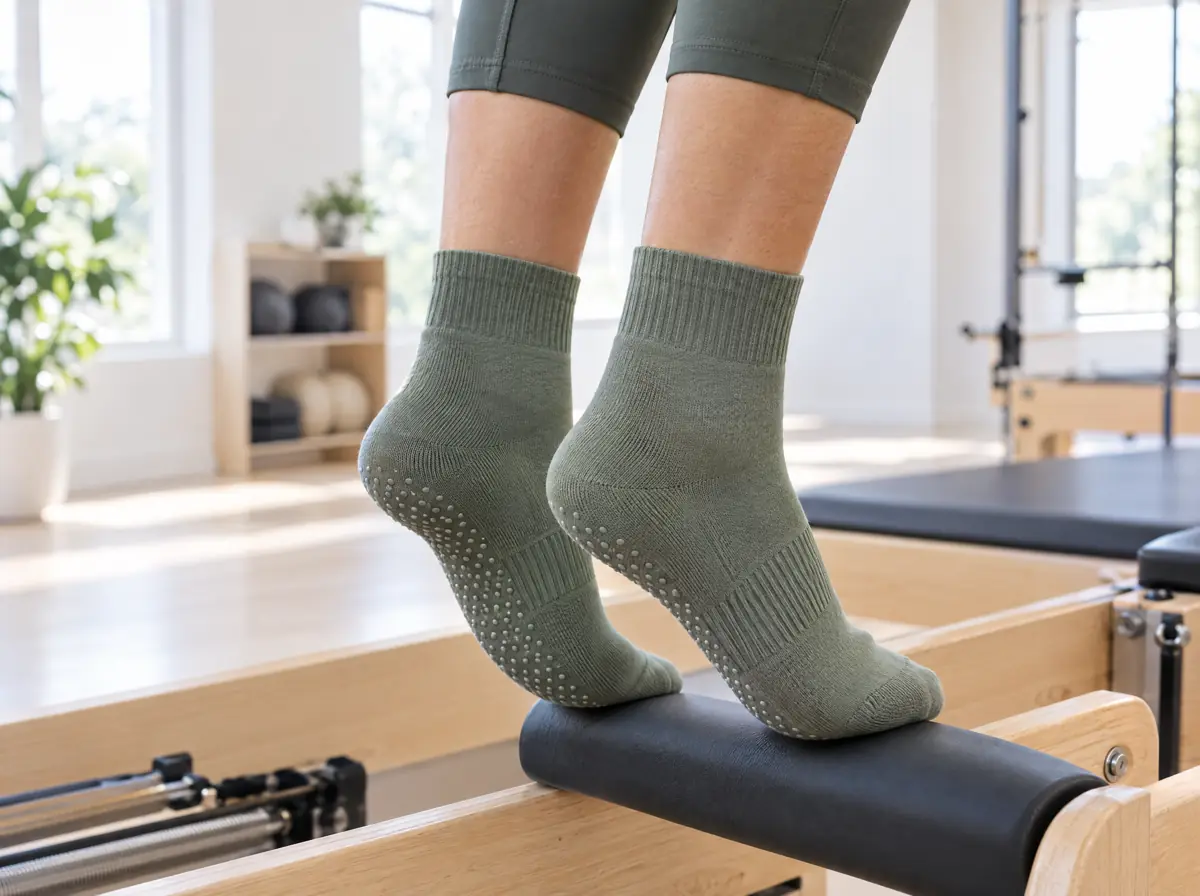
How to choose Pilates grip socks.
Many reformer and mat studios ask you to wear grip socks. Here's what actually differs between pairs, so you can pick one that suits how you train.
1. Closed toe or toeless
Toeless (five-toe or open-toe) socks leave your toes free. Closed-toe socks look like a regular ankle sock and keep your whole foot covered and warm, which many people prefer in cool studios or in a Canadian winter. Both work for class; it comes down to comfort and the look you like. Some studios have a preference, so check if you're unsure.
2. Where the grip sits
Look at the sole. Check where the grip pattern sits and whether it covers the areas you load in class: the ball of the foot and toes for relevé and footwork on the toes, and the heel if your class does footwork with heels on the bar. Patterns vary a lot between brands, so compare a few.
3. Cuff height and heel
Low "no-show" socks can slide down under the heel during class. An ankle-height cuff, sometimes with a heel tab, tends to stay put. Try a few movements at home before your first class.
4. Fabric
Cotton-rich blends feel soft and breathable; a little nylon and spandex helps the sock keep its shape. Check the label for the fibre mix rather than relying on marketing words.
5. Fit and sizing
Grip socks should fit snugly with no extra fabric bunching at the toe. Measure your foot from heel to longest toe in centimetres and compare it with the brand's size chart. If you're between sizes, the brand's guidance matters more than your shoe size.
6. Care
Washing cold, inside out, and air-drying is generally gentler on silicone grip. Skip fabric softener, which can leave a film on the grip.
7. How many pairs
If you go to class two or three times a week, a few pairs means one in the wash, one in your bag and a spare. That's why we're planning a 3-pack.
Quick checklist
- Toe style you're comfortable in
- A grip pattern that covers the areas you load in class
- Cuff that stays up
- A size chart in centimetres
- Clear care instructions
This guide is general information, not studio policy or advice. Always follow your studio's rules.